Why Peptides Can't Cross Skin: The Actual Biology
This isn't a marketing opinion or a competitor's spin. It's basic pharmacology, and it's worth understanding before you spend money assuming a patch can do what an injection does.
Here's the straightforward science behind why skin blocks certain molecules and lets others through, and where GLP-1 medication falls on that spectrum.
Skin is a genuinely good barrier, on purpose
Your skin's outer layer, the stratum corneum, evolved specifically to keep things out. That's not a design flaw for transdermal drug delivery — it's the whole point of skin. Only certain molecules manage to cross it in meaningful amounts.
What can cross: small and fat-soluble
Nicotine and estrogen are the textbook examples of successful transdermal delivery — both are small, fat-soluble molecules that can slip through skin's lipid layers. This is real, well-established pharmaceutical technology, not a stretch.
What can't cross: large and water-soluble
GLP-1 medications like semaglutide and tirzepatide are large, water-soluble, electrically charged peptide molecules. That combination of size, water-solubility and charge is exactly what skin is built to block. It's not that nobody has tried — it's that the physics don't cooperate without specialized technology like microneedles, which aren't what a $30 adhesive patch contains.
What's happening in the research
Scientists are genuinely working on advanced transdermal peptide delivery — microneedle arrays, chemical penetration enhancers, and similar technology. Early animal studies on experimental semaglutide patches have shown some promise. But that's meaningfully different from the adhesive supplement patches sold online today, which use none of that specialized technology and contain no GLP-1 medication in the first place.
What this means for you
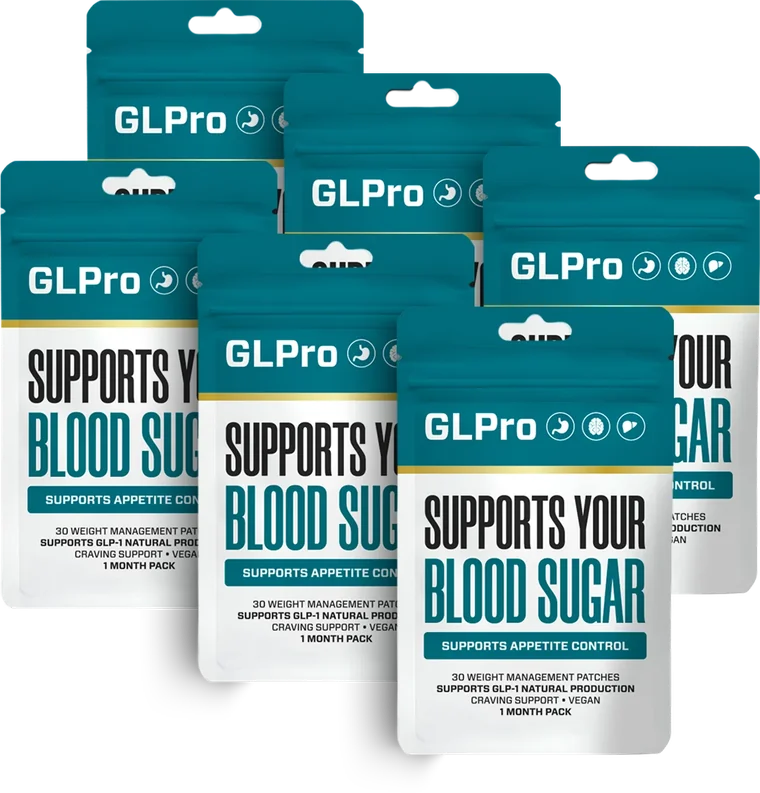
If a patch's marketing implies it delivers GLP-1-like effects through simple skin contact, the underlying biology doesn't support that claim — regardless of how the product is named or branded. That doesn't mean every patch ingredient is worthless; it means the specific mechanism being implied isn't how the science actually works.
Where this leaves GLpatches
GLpatches' seven ingredients are smaller molecules than GLP-1 peptides, which is more plausible for skin delivery — but we still aren't aware of studies confirming meaningful transdermal absorption for this specific patch formulation. Worth knowing either way.